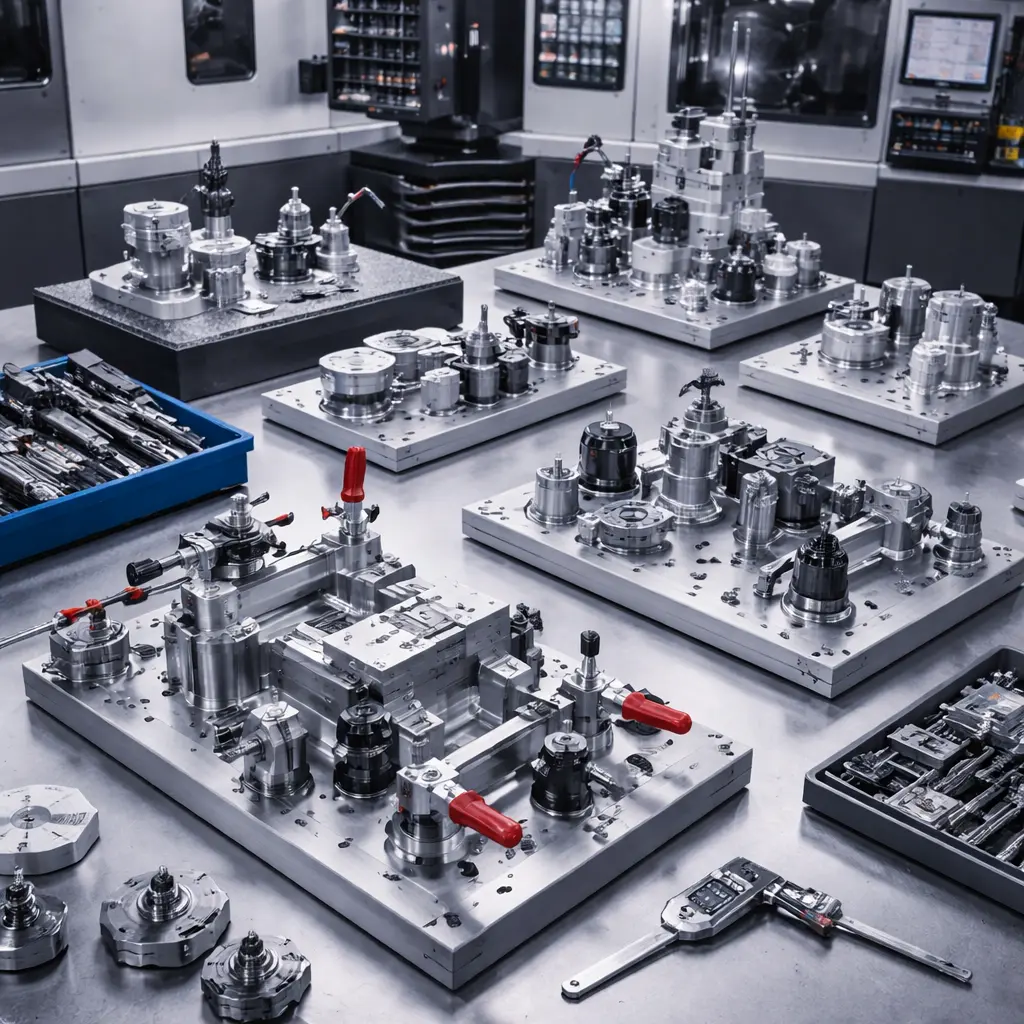
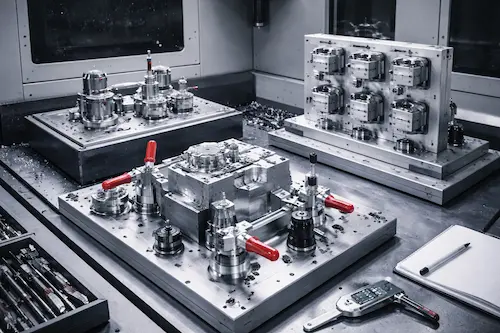
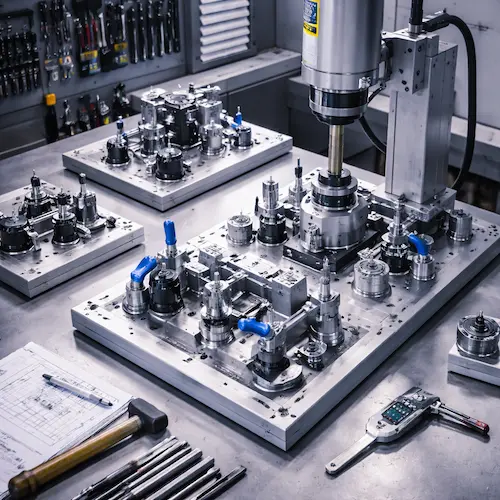
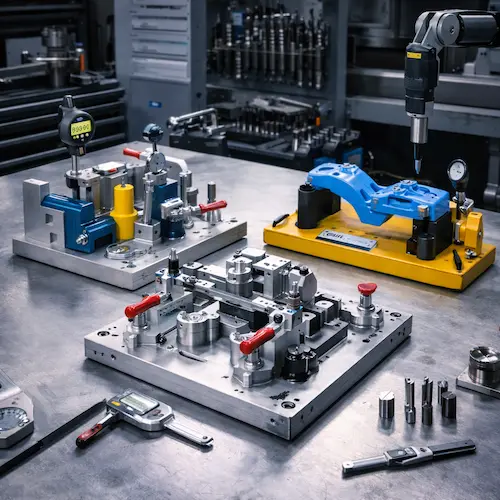
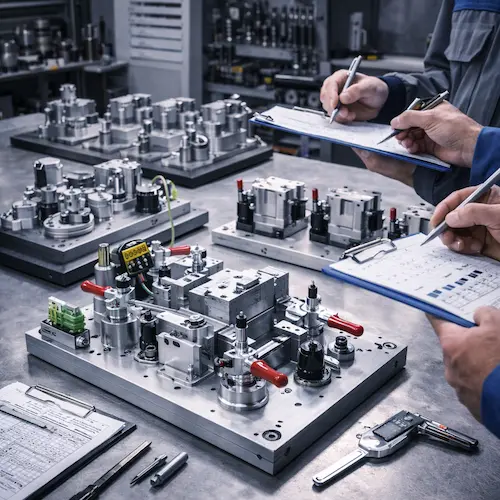
Custom jigs, fixtures and gauges for locating, clamping, assembly and inspection, with engineering review and manufacturing support.

Jig and Fixture Manufacturing

Custom jigs, fixtures and gauges for machining, assembly and inspection. We review locating datums, clamping forces, access, critical dimensions and operating requirements to support repeatable setups and consistent results.

When Do You Need a Jig or Fixture?

Inconsistent machining or assembly results that require better control of locating datums, workholding or part orientation.
Manual alignment or temporary setups that cause positioning errors, variable cycle times or difficult-to-trace assembly problems.
Pilot builds or production runs that need repeatable locating, clamping and inspection methods.
Operations that need clear loading and inspection procedures to reduce variation between operators and shifts.
Request a Quote Discuss Your Fixture With an Engineer
Contact our team to arrange an NDA before sharing sensitive drawings or project information.

What Are Jigs and Fixtures?

Jigs guide a tool or operation; fixtures locate and hold the workpiece. Inspection fixtures and gauges establish repeatable references for measurement. Each type of tooling should be designed around the part, process and required accuracy.

Locating: Repeatable Part Position

Datum faces, locating holes, pins and stops define the part's position in three-dimensional space, reducing variation between setups.

Typical features:

Defined datums and repeatable location
Locating pins, V-blocks and stops
Critical dimensions referenced to a consistent locating system

Clamping: Stable Workholding

Hold parts securely during cutting, assembly or handling while controlling distortion and vibration to improve surfaces, hole alignment and assembly results.

Typical features:

Planned clamping forces and support points
Distortion control for thin walls and long parts
Fast loading with fewer alignment checks

Guidance: Fewer Operating Errors

Guide pins, drill bushings, rails and stops control movement during an operation. Orientation features and mistake-proofing help prevent incorrect loading and improve consistency between operators.

Typical features:

Drill bushings, guide pins and travel stops
Mistake-proof orientation, location and part identification
Less dependence on individual experience

Inspection Support: Faster, Consistent Checks

Inspection fixtures and gauges define the measuring position and datum, reducing setup time and supporting repeatable checks of critical features.

Typical features:

Defined inspection datums and fast loading
Go/no-go gauges and functional checks
Inspection records for consistent decisions and traceability

Jig and Fixture Manufacturing Capabilities

Effective tooling combines repeatable locating, suitable clamping forces and practical access. We review the design, manufacturing processes, assembly and trial requirements so the fixture can be checked under representative conditions before production use.

  1. Requirements Review and DFM

    Use part drawings, process plans and application information to define locating datums, critical dimensions and positioning accuracy and repeatability targets. Assess interference, distortion, access and misloading risks, then recommend design and process improvements.

  2. Locating and Clamping Concepts

    We provide positioning and clamping with defined datums and controlled degrees of freedom, considering accessibility, distortion control and changeover efficiency for repeatable setups and predictable operation.

  3. Guidance and Mistake-Proofing

    We provide guidance with pins, bushings, stops, orientation features and mistake-proof structures. Clear loading and operating sequences reduce errors and improve consistency across operators and shifts.

  4. Gauges and Inspection Fixtures

    We provide inspection support with defined measuring positions and datums for fast loading and consistent decisions. Combine gauges or test fixtures with dimensional records where required for traceability.

  5. Manufacturing, Assembly and Commissioning

    Select CNC machining (main bodies and precision locators), sheet metal fabrication (frames and guards) and 3D printing (validation parts and rapid iterations) according to the design. Assemble and check the tooling for practical operation, stability and maintainability before delivery.

Common Jig and Fixture Applications

We manufacture CNC workholding fixtures, assembly and press-fit fixtures, inspection gauges and production tooling. Locating, clamping, guidance and inspection features are selected for the operation and the required repeatability.

CNC workholding fixtures for locating, multi-face machining and repeat setups

CNC Workholding Fixtures

Define location and clamping to reduce setup variation and maintain consistent hole patterns, profiles and datum relationships across production batches.

Value:

More consistent machining
Less loading and alignment time
Assembly and press-fit fixtures with defined locating and clamping features

Assembly Fixture Design and Validation

Define part orientation, locating references and assembly sequence. Constrain movement and incorporate guidance and mistake-proofing to reduce human error and stabilize cycle times.

Value:

More efficient assembly
Fewer operating errors
Multi-material tooling for fast checks and functional inspection

Multi-Material, Multi-Process Tooling

Combine metals, engineering plastics or composites using CNC machining, sheet metal fabrication and 3D printing. Quick-change and serviceable structures support different production lines and inspection cycles.

Value:

Faster inspection
Consistent acceptance decisions
Engineering review and quality control for pilot and production fixtures

Engineering Review and Quality Control

Validate locating datums, critical dimensions and acceptance criteria before production use. Maintain drawings and delivery records so additional fixtures can be manufactured consistently.

Value:

A repeatable foundation for production

Our Jig and Fixture Manufacturing Process

  1. Share Drawings and Application Details

    • Provide part drawings and machining, assembly or inspection requirements
    • Include datums, cycle time targets and existing production issues
    • Define requirements and performance targets
  2. Engineering Review and Concept Development

    • Confirm locating, clamping, guidance and inspection goals
    • Identify interference, distortion and misloading risks
    • Develop the fixture structure and functional concept
  3. Design Confirmation and Quotation

    • Confirm geometry, materials and manufacturing processes
    • Define critical features and delivery scope
    • Agree on pricing, lead time and implementation schedule
  4. Trial Build and Application Validation

    • Check locating accuracy and clamping stability
    • Assess assembly cycle time and ease of use
    • Refine and approve the design using trial feedback
  5. Delivery and Repeat Manufacturing

    • Deliver tooling with agreed operation and maintenance information
    • Retain approved samples, datums and acceptance standards
    • Support the transition from pilot use to production

Build Your Next Project With Us

Contact our team about confidentiality before sharing sensitive files.

Frequently Asked Questions