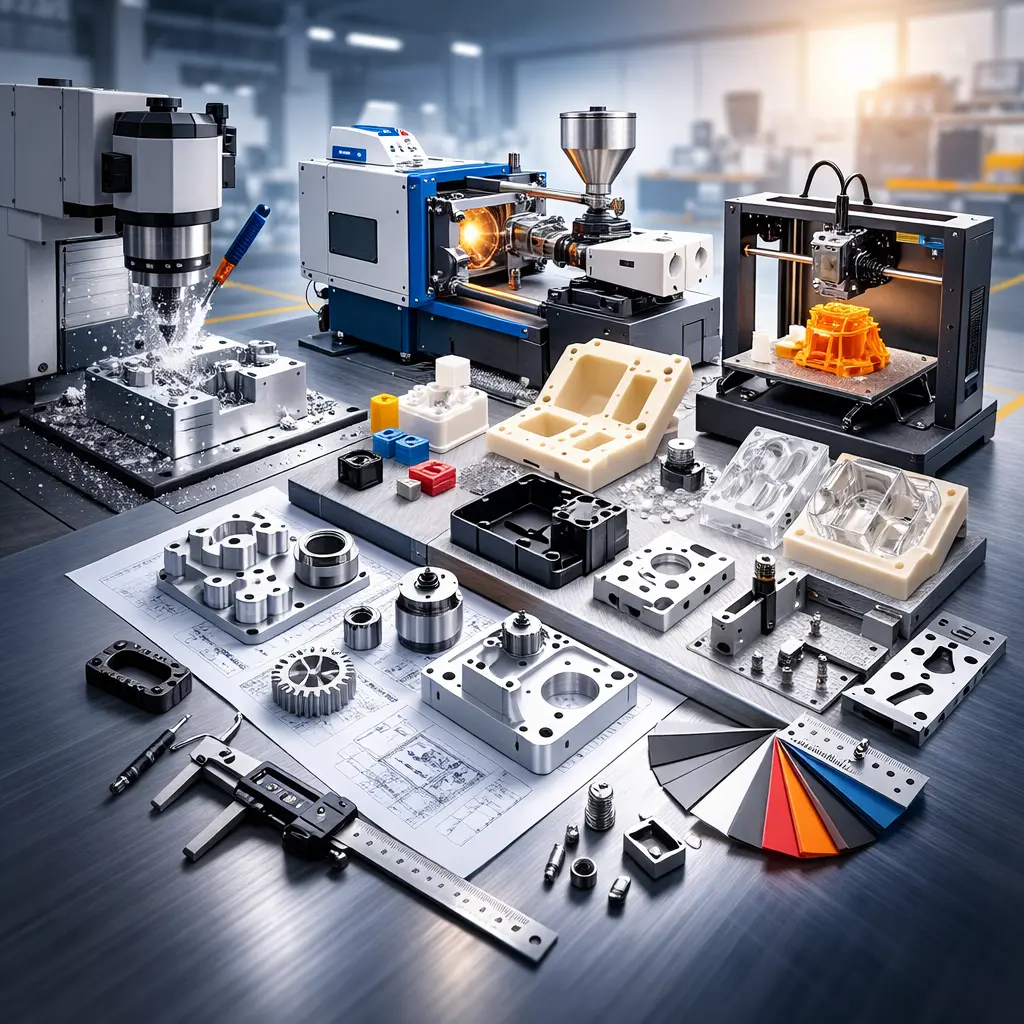
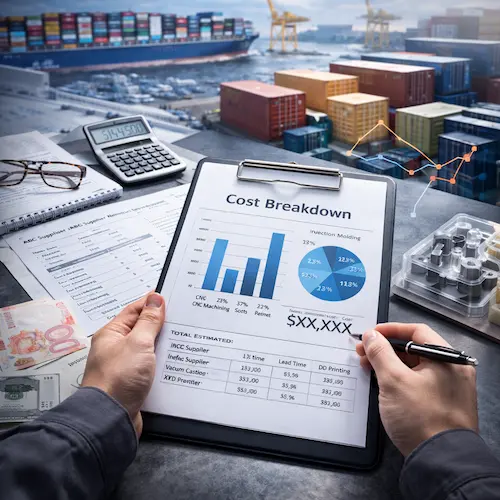
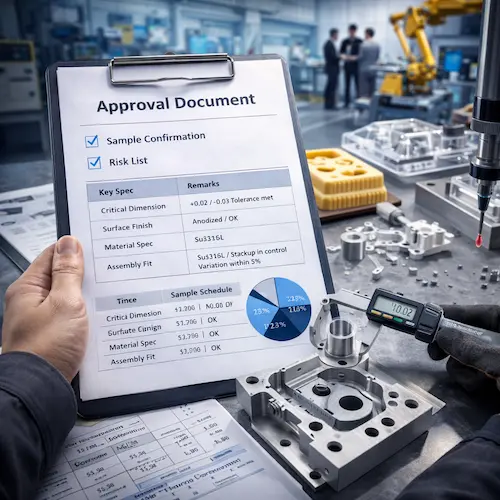
Low-volume manufacturing and NPI pilot builds using CNC machining, injection molding, sheet metal, vacuum casting and 3D printing, supported by DFM reviews and production planning.

Low-Volume Manufacturing

Support new product introduction (NPI) with low-volume builds that assess assembly fit, critical dimensions, appearance and process repeatability. CNC machining, sheet metal fabrication, 3D printing, vacuum casting and injection molding can be combined with engineering reviews to identify risks before production volumes increase.

Suitable for projects that need:

A pilot build to assess process repeatability and the stability of critical dimensions before volume production.
A low-volume run to check functional performance, assembly consistency and cosmetic quality across multiple parts.
A comparison of manufacturing options based on cost, lead time, tooling requirements and production risks.
Early identification of design and process issues to reduce rework, tooling changes and batch variation.
Request a Quote Explore Pilot Build Capabilities
Information to include: Pilot quantity, materials, finishing, critical dimensions and assembly requirements. Contact our engineering team to discuss confidentiality or an NDA before sharing sensitive files.

Low-Volume Manufacturing Capabilities

Pilot builds assess the proposed manufacturing route before volume production. We combine process selection, design for manufacturability (DFM) reviews and inspection to evaluate repeatability. Agreed deliverables may include a critical-to-quality (CTQ) feature list, dimensional reports, CMM or gauge measurements and approved cosmetic samples.

  1. Production Readiness Review

    Review thin-wall distortion, workholding datums, hole alignment, surface protection and tolerance stacks. Define the pilot-build checklist, CTQ features and control points.

  2. DFM Review Before Manufacturing

    Assess assembly datums, tool access, formability, thin walls, appearance and tolerance stacks, then provide practical design recommendations and a risk list.

  3. Bridge Manufacturing With Multiple Processes

    Match CNC machining, sheet metal fabrication, vacuum casting, low-volume injection molding and 3D printing to your project goals. Compare costs and lead times to plan the transition from pilot builds to production.

  4. In-Process Inspection and Dimensional Verification

    Confirm critical dimensions and datums, then provide inspection records, dimensional reports, CMM or gauge data and assembly feedback as required for production decisions.

  5. Materials and Finishes Representative of Production

    Choose metals or engineering plastics and finishes such as powder coating, anodizing, plating, painting or screen printing to make pilot-build results representative of the intended production parts.

Common Pilot Build Applications

Use pilot builds to evaluate assembly fit, functional performance, unit cost and supply readiness. Document the results and any corrective actions before deciding whether to increase production volume.

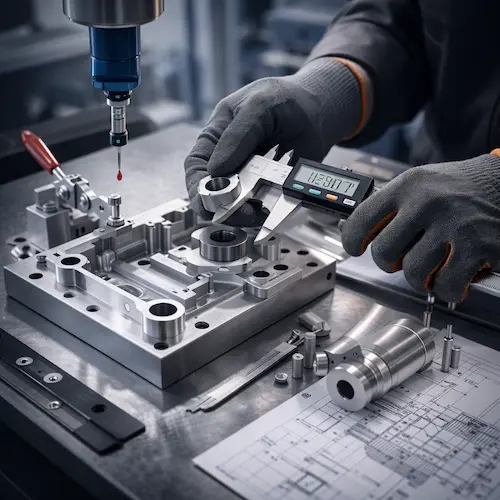
Assembly consistency checks across multiple sets and tolerance stacks

Assembly Consistency

Check that multiple sets assemble correctly, critical fits remain stable and tolerance accumulation does not cause gaps, misalignment or interference.

Validation focus:

Repeatable location, insertion, fastening and snap fits
Tolerance accumulation, gaps, misalignment and interference
Assembly difficulty, nonconformity patterns and rework locations
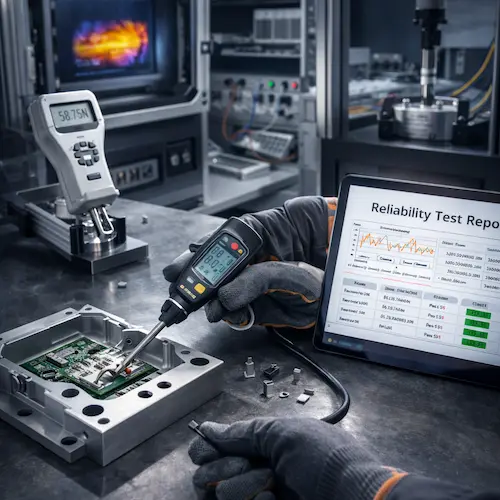
Functional and reliability validation using low-volume samples

Function and Reliability

Use low-volume samples for tests representative of the operating environment, checking functional consistency and extended use before production increases.

Validation focus:

Durability, wear, loosening and fatigue
Functional variation and nonconformity rates across the batch
Failure modes and operating limits, including load, temperature and vibration
Unit cost, supply consistency and scale-up readiness review

Cost and Supply Chain Review

Verify actual unit cost and supply stability at low volume, then assess whether the process route can meet production quantity and cost targets.

Review focus:

Unit cost: materials, labor, fixtures, finishing and scrap
Scale-up readiness: cycle time, yield and capacity constraints
Consistency of materials, outsourced processes and purchased components
Production readiness decisions for injection molding or CNC production

Production Readiness Decision

Use pilot-build results to determine whether the design, process controls and inspection criteria are ready for higher volumes, or whether further changes are required.

Key decisions:

Readiness for injection molding, CNC production or another production process
Further DFM, assembly or appearance improvements required
Production standards for critical dimensions, appearance and inspection

Our Pilot Build Process

  1. Share Drawings and Validation Goals

    • Common 2D and 3D formats include STEP, IGES, STL, DWG and DXF
    • Include quantity, materials, finishing, appearance criteria, critical dimensions, datums, tolerances, GD&T, assembly relationships and acceptance criteria
    • Timing: Review starts after the drawings and requirements are complete
  2. Engineering Review and Pilot Build Plan

    • Identify consistency risks from thin walls, distortion, workholding, hole patterns, tolerance stacks and cosmetic surfaces
    • Select CNC machining, sheet metal fabrication, vacuum casting, injection molding or 3D printing for the validation goals
    • Timing: Initial recommendations follow engineering review
  3. DFM Review and Quotation

    • Engineers review geometry and validation goals, then provide DFM recommendations and a risk list
    • Compare process pricing, materials, finishing and lead times
    • Timing: Review and quotation schedule agreed for your project
  4. Pilot Manufacturing and In-Process Inspection

    • Manufacture to the agreed validation plan with coordinated processes and batch identification
    • Record critical dimensions, appearance and assembly checks, with dimensional reports, CMM or gauge data and feedback as required
    • Lead time: Confirmed after review of the process, tooling status, quantity and inspection requirements
  5. Delivery and Production Recommendations

    • Deliver pilot parts with agreed inspection records and batch-specific nonconformity feedback
    • Recommend further optimization, a production strategy or process changes based on the findings
    • Timing: Shipping time depends on destination and the agreed service

From Pilot Builds to Production

Pilot builds provide evidence for production decisions. Documented inspection results, assembly feedback and corrective actions help avoid repeated trials and unresolved manufacturing risks.

Reusable Engineering Findings

Record critical dimensions, datums, cosmetic acceptance criteria, process risks, material grades and finishing requirements. Use the verified results to establish production controls and identify any remaining validation work.

Reusable findings + traceable risks + production readiness
  • Define critical dimensions, datums and inspection methods
  • Identify consistency risks and the causes of nonconformities
  • Recommend a production strategy and manufacturing route

A Practical Path to Production

Choose the next manufacturing route according to design maturity and production targets, then refine it using the pilot-build findings.

Pilot build → Process stabilization → Volume ramp-up → Production
  • Pilot build → CNC production: Repeat production of functional metal parts
  • Pilot build → Injection molding: Tool design, mold trials and production after design validation
  • Pilot build → Process optimization: Design and process improvements for yield and appearance

Reusable pilot-build findings and a defined production plan help reduce rework, tooling changes and batch defects before volume increases.

Reduce Production Risks With a Pilot Build

Contact our team about confidentiality before sharing sensitive files.

Frequently Asked Questions