
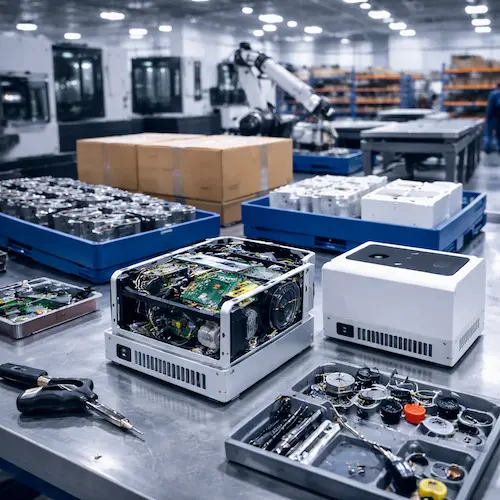
Production manufacturing using CNC machining, injection molding, sheet metal fabrication and die casting, supported by DFM, quality controls and traceable records.

Volume Production

Manufacture repeat production batches using CNC machining, injection molding, sheet metal fabrication and die casting. Engineering reviews, defined process controls, agreed inspection criteria and delivery planning support the transition from approved pilot parts to ongoing supply.

Suitable for projects that need:

An approved or nearly finalized design that needs a defined manufacturing process, critical dimension controls and acceptance criteria.
A transition from pilot builds to repeat production with agreed quality, capacity, cost and delivery targets.
A comparison of CNC machining, injection molding, sheet metal fabrication and die casting against part requirements and production volumes.
Documented first article, in-process and final inspection results for batch traceability and acceptance.
Request a Production Quote Explore Our Production Capabilities
Contact our team to arrange an NDA before sharing sensitive drawings or project information.

Capabilities for Consistent Production

We turn pilot-build findings into defined production standards. Controlled tolerances, process parameters, manufacturing handoffs, quality checks and delivery schedules support repeatable output as volumes increase.

  1. Production Readiness Review

    Review pilot-build results and remaining risks. Confirm process readiness, tolerances and materials, and define contingency options before volume production begins.

  2. Standardized Process Parameters

    Define the manufacturing route, tools, fixtures, molds, critical settings and inspection points to create a repeatable production baseline and reduce batch variation.

  3. Coordinated Manufacturing Processes

    Select the right production processes for each component: CNC machining (precision functional parts), sheet metal fabrication (enclosures and structures) and injection molding (plastic parts), combining capabilities to meet cost and lead time goals.

  4. Quality Control and Batch Consistency

    Complete first article inspection as required, then monitor critical dimensions and assembly fit throughout production. Retain batch data for traceability and rapid investigation.

  5. Capacity and Delivery Planning

    Align production schedules with your forecasts and inventory strategy, using a single shipment or a planned series of deliveries for more predictable capacity and lead times.

Common Production Applications

Reliable production requires consistent batches and a delivery plan matched to demand. Controlled drawings, material specifications, process settings and inspection criteria support repeat orders and phased shipments.

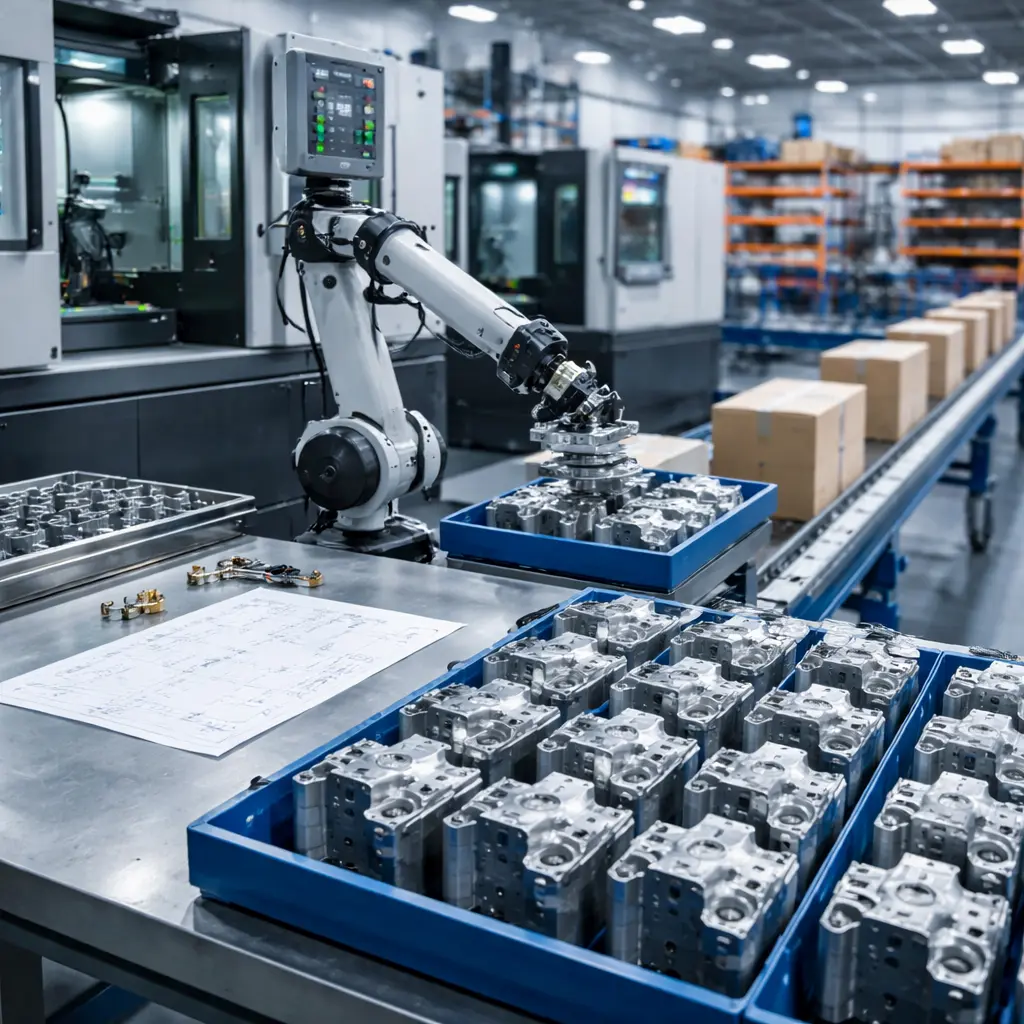
Product launches: first deliveries and ongoing market replenishment

Product Launches

Support launch schedules with consistent first deliveries and planned replenishment as demand grows.

Typical requirements:

Initial launch quantities
Ongoing replenishment and volume increases
Predictable quality and lead time
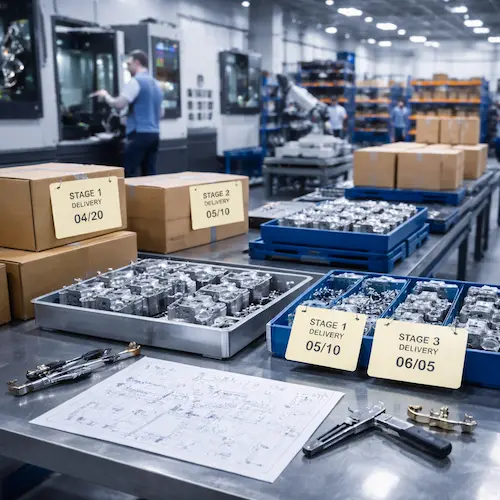
Project-based supply: system integration and milestone-based component delivery

Project-Based Supply

Deliver components in phases aligned with project milestones, system assembly and commissioning to reduce waiting and rework.

Typical requirements:

Engineering projects and system integration
Milestone-based component deliveries
Batch consistency and traceability
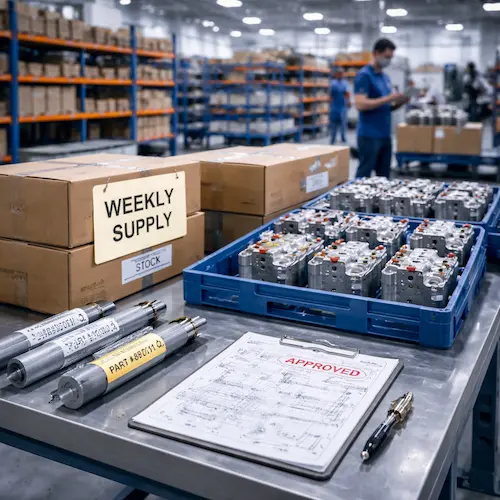
Long-term supply: controlled part numbers and recurring production batches

Long-Term Supply

Maintain controlled part numbers and specifications for mature equipment or recurring demand, with consistent supply across multiple batches.

Typical requirements:

Established part numbers
Recurring batch deliveries
Stable quality and predictable schedules
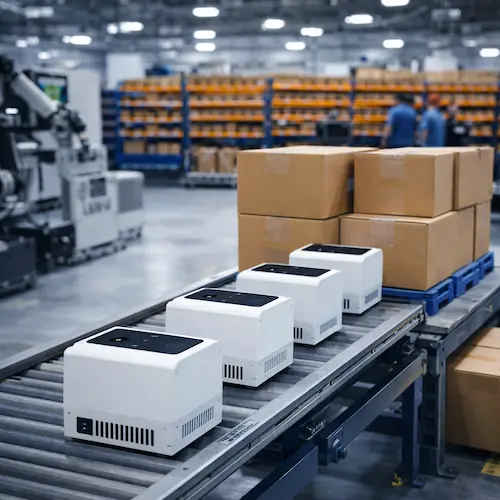
Coordinated production of metal structures, plastic housings, functional parts and fixtures

Products Using Multiple Processes

Coordinate processes, specifications and schedules for components and assemblies to reduce integration risks.

Typical combinations:

Metal structures and plastic housings
Functional components and fixtures
Matched sets and batch shipments

Our Volume Production Process

  1. Share Drawings and Production Requirements

    • Common 2D and 3D formats include STEP, IGES, STL, DWG and DXF
    • Include quantities, shipment schedules, appearance criteria, critical dimensions, datums and inspection needs
    • Timing: Review starts after the drawings and requirements are complete
  2. Engineering Review and Production Planning

    • Identify yield risks from tolerance stacks, workholding, distortion, mold design, finishing consistency and shipping protection
    • Recommend CNC machining, injection molding, sheet metal fabrication or die casting with defined control points
    • Timing: Initial recommendations follow engineering review
  3. Confirm the Quotation and Quality Standards

    • Provide production pricing, material and finishing recommendations, lead time and capacity planning
    • Agree on first article, in-process and outgoing inspection, sampling rules and acceptance criteria
    • Timing: Review and quotation schedule agreed for your project
  4. Pilot Build and Process Controls

    • Approve the first article and establish controls that can be applied consistently across production batches
    • Complete a low-volume pilot build before production where needed
    • Typical delivery plan: Weekly or batch shipments after pilot-build approval, as agreed
  5. Batch Delivery and Quality Documentation

    • Ship the agreed quantities with inspection records, dimensional reports and other required documents
    • Control revisions and engineering changes (ECN) to maintain consistent delivery
    • Timing: Shipping time depends on destination and the agreed service

From Pilot Builds to Production

Reliable production starts with defined standards. We turn prototype and pilot-build findings into manufacturing routes and quality requirements that can be applied consistently.

Turn Pilot Results Into Production Standards

Record critical dimensions, datums, inspection methods, approved appearance samples, material grades, batch controls, finishing settings and packaging requirements. Applying the same standards to every batch reduces variation and repeated review.

Clear standards + consistent execution + traceable records
  • Define critical dimensions, datums and inspection methods
  • Agree on appearance standards and acceptable defects
  • Establish process windows and control points

A Defined Path From Trials to Volume Production

Phase production according to design maturity, quantity and cost targets, with verification at each step before increasing volume.

Engineering review → Pilot build → Process standardization → Stable production
  • Pilot builds → CNC production: High-mix, low-volume orders and fast ramp-up
  • Pilot builds → Injection molding: Scalable production after design validation
  • Pilot builds → Die casting: Volume production of metal structural parts

Defined specifications, verified process controls and supply planning help manage ramp-up risks and maintain consistent quality, delivery and traceability.

Plan Your Production With Us

Contact our team about confidentiality before sharing sensitive files.

Frequently Asked Questions