
SGCC Hot-Dip Galvanized Steel
SGCC is hot-dip galvanized sheet steel. Its zinc coating is typically thicker than an electrogalvanized coating and can provide greater protection in damp or outdoor conditions. Surface spangle and texture can vary between batches, so painting or powder coating may be needed for consistent cosmetic quality. Forming and assembly performance is useful, but cut edges and welds may require supplementary corrosion protection.
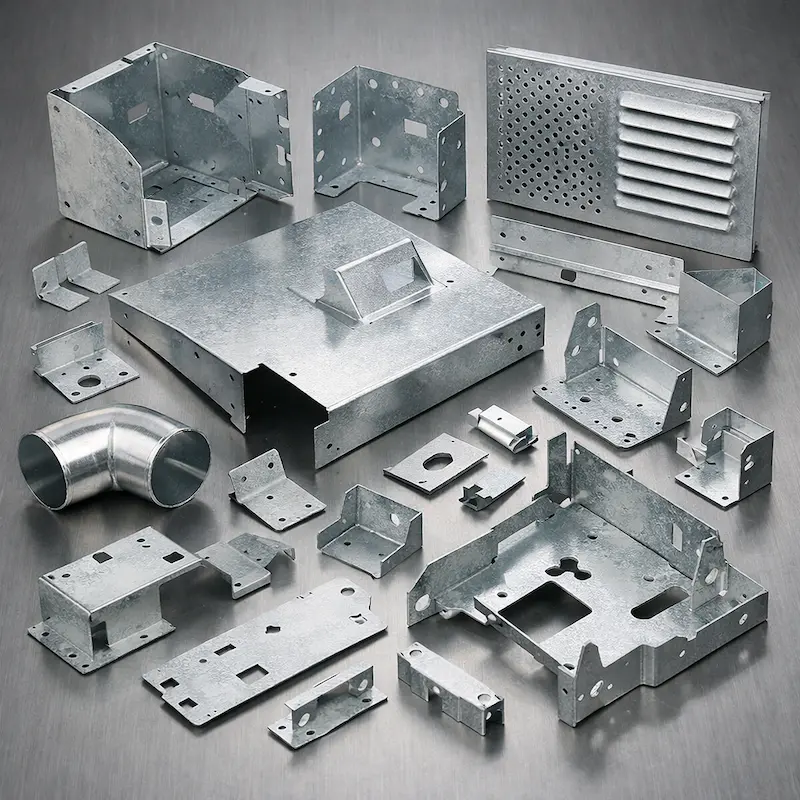
Typical Applications
Outdoor cabinets and enclosures, distribution and control boxes, ventilation and HVAC housings, construction-related sheet metal, and brackets or guards in damp environments. Suitable where corrosion protection and weather resistance are priorities.
Reference Properties & Manufacturing Parameters
Reference values are indicative and are not guaranteed specifications. Material grade, stock condition, processing, test method and part geometry can change the result. A listed temperature is not a continuous-use rating.
| Dimensional tolerance | ±0.3 mm |
|---|---|
| Minimum wall thickness | 1.0 mm |
| Reference temperature range | ≤200 °C |
| Reference tensile strength | 270–500 MPa |
| Reference density | 7.85 g/cm³ |
- Reference values vary with grade, material condition, part geometry and manufacturing process. Confirm final specifications during drawing review.
- Temperature figures are source reference values; the test method, loading and exposure duration are not specified and must be confirmed for the application.
Finishing Options
Confirm compatibility with the exact material grade and application. Define cosmetic surfaces, coating thickness, masking and any dimensional or performance requirements before manufacture.
Design & Manufacturing Review
- Specify sheet grade, thickness, finish and rolling direction where relevant. Confirm the selected stock before finalizing bend geometry.
- Review bend radii, bend reliefs, hole-to-bend distances and fastener access. Flat patterns must account for the actual forming process.
- Define weld locations, cosmetic surfaces and any coating or masking requirements.
For a quotation, email CAD files, drawings, material requirements, quantity and target delivery date to [email protected].