
T2 Copper
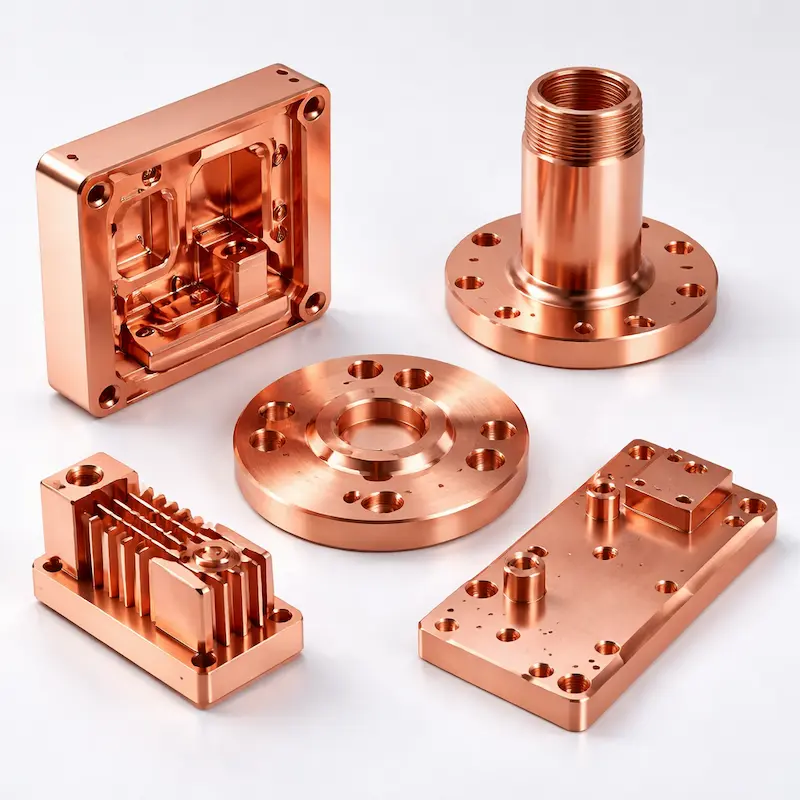
T2 is a common high-purity copper grade with high electrical and thermal conductivity and good ductility. It is suited to electrical conductors and heat-transfer components. Sharp tooling and controlled cutting temperatures help limit built-up edge and burrs. Tin or nickel plating and anti-tarnish treatments can improve surface stability. Consider bronze, brass or beryllium copper where strength and wear resistance matter more than maximum conductivity.
Typical Applications
Conductors, busbars, grounding components, heat-transfer blocks and welding contacts. Consider C17200 for spring properties and high strength, C18150 for conductive components exposed to thermal cycling, or aluminum and tin bronzes for greater wear resistance.
Reference Properties & Manufacturing Parameters
Reference values are indicative and are not guaranteed specifications. Material grade, stock condition, processing, test method and part geometry can change the result. A listed temperature is not a continuous-use rating.
| Dimensional tolerance | Confirm during drawing review |
|---|---|
| Minimum wall thickness | 1.0 mm |
| Reference temperature range | 200 °C |
| Reference tensile strength | 200–240 MPa |
| Reference density | 8.96 g/cm³ |
- Reference properties depend on the supplied grade, condition and test method. Confirm the required material specification before ordering.
- The listed temperature is a catalog reference, not a guaranteed continuous-service limit; assess load, duration and environment for the application.
- The source does not state units for the tolerance value. Confirm dimensional tolerances during drawing review.
Finishing Options
Confirm compatibility with the exact material grade and application. Define cosmetic surfaces, coating thickness, masking and any dimensional or performance requirements before manufacture.
Design & Manufacturing Review
- Provide a 3D CAD model and a dimensioned 2D drawing identifying critical tolerances, datums, threads and fits.
- Review thin walls, deep cavities, internal corner radii and tool access. Material condition and workholding affect distortion and achievable tolerances.
- Define cosmetic surfaces and masking requirements. Coating thickness may affect dimensions and assembly fits.
For a quotation, email CAD files, drawings, material requirements, quantity and target delivery date to [email protected].