
40Cr Alloy Steel
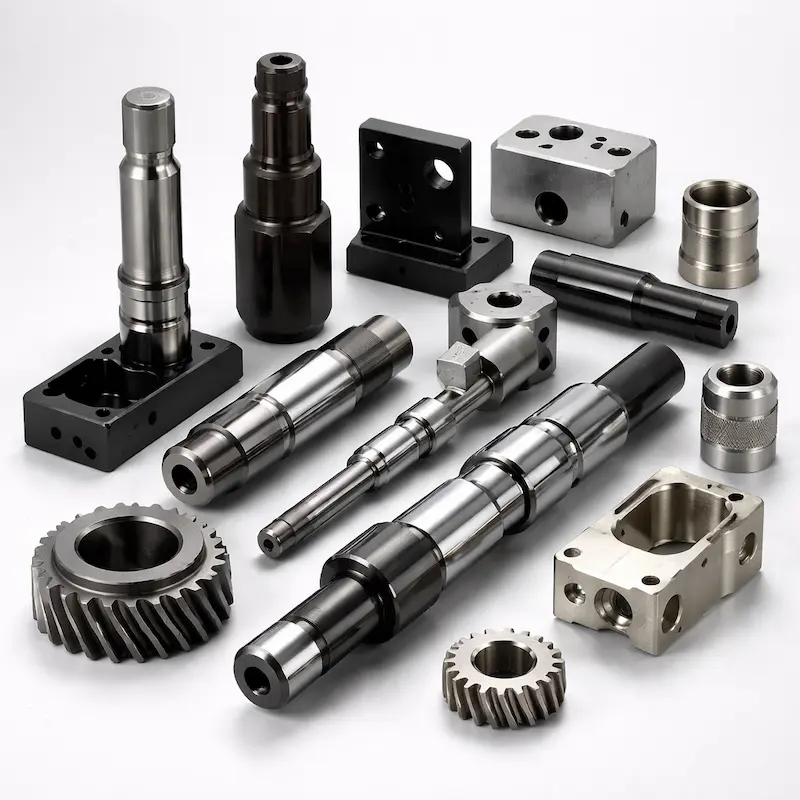
40Cr is a chromium-alloy structural steel that offers strength, toughness and fatigue resistance after quenching and tempering. It is used for loaded or impact-loaded functional parts such as shafts, gears, couplings and critical fixture components. Compared with grade 45 carbon steel, it offers improved hardenability and heat-treatment response. Machining can be scheduled before or after heat treatment to suit the part. Black oxide, plating or paint can provide corrosion protection.
Typical Applications
Shafts, gears, couplings, load-bearing structures, critical fixture components and parts subject to fatigue. Quenching and tempering are commonly specified to achieve the required strength and toughness. Consider stainless steel for corrosion resistance; assess surface hardening or a tool steel for severe wear.
Reference Properties & Manufacturing Parameters
Reference values are indicative and are not guaranteed specifications. Material grade, stock condition, processing, test method and part geometry can change the result. A listed temperature is not a continuous-use rating.
| Dimensional tolerance | Confirm during drawing review |
|---|---|
| Minimum wall thickness | 1.0 mm |
| Reference temperature range | 500 °C |
| Reference tensile strength | 800–1100 MPa |
| Reference density | 7.85 g/cm³ |
- Reference properties depend on the supplied grade, condition and test method. Confirm the required material specification before ordering.
- The listed temperature is a catalog reference, not a guaranteed continuous-service limit; assess load, duration and environment for the application.
- The source does not state units for the tolerance value. Confirm dimensional tolerances during drawing review.
Finishing Options
Confirm compatibility with the exact material grade and application. Define cosmetic surfaces, coating thickness, masking and any dimensional or performance requirements before manufacture.
Design & Manufacturing Review
- Provide a 3D CAD model and a dimensioned 2D drawing identifying critical tolerances, datums, threads and fits.
- Review thin walls, deep cavities, internal corner radii and tool access. Material condition and workholding affect distortion and achievable tolerances.
- Define cosmetic surfaces and masking requirements. Coating thickness may affect dimensions and assembly fits.
For a quotation, email CAD files, drawings, material requirements, quantity and target delivery date to [email protected].